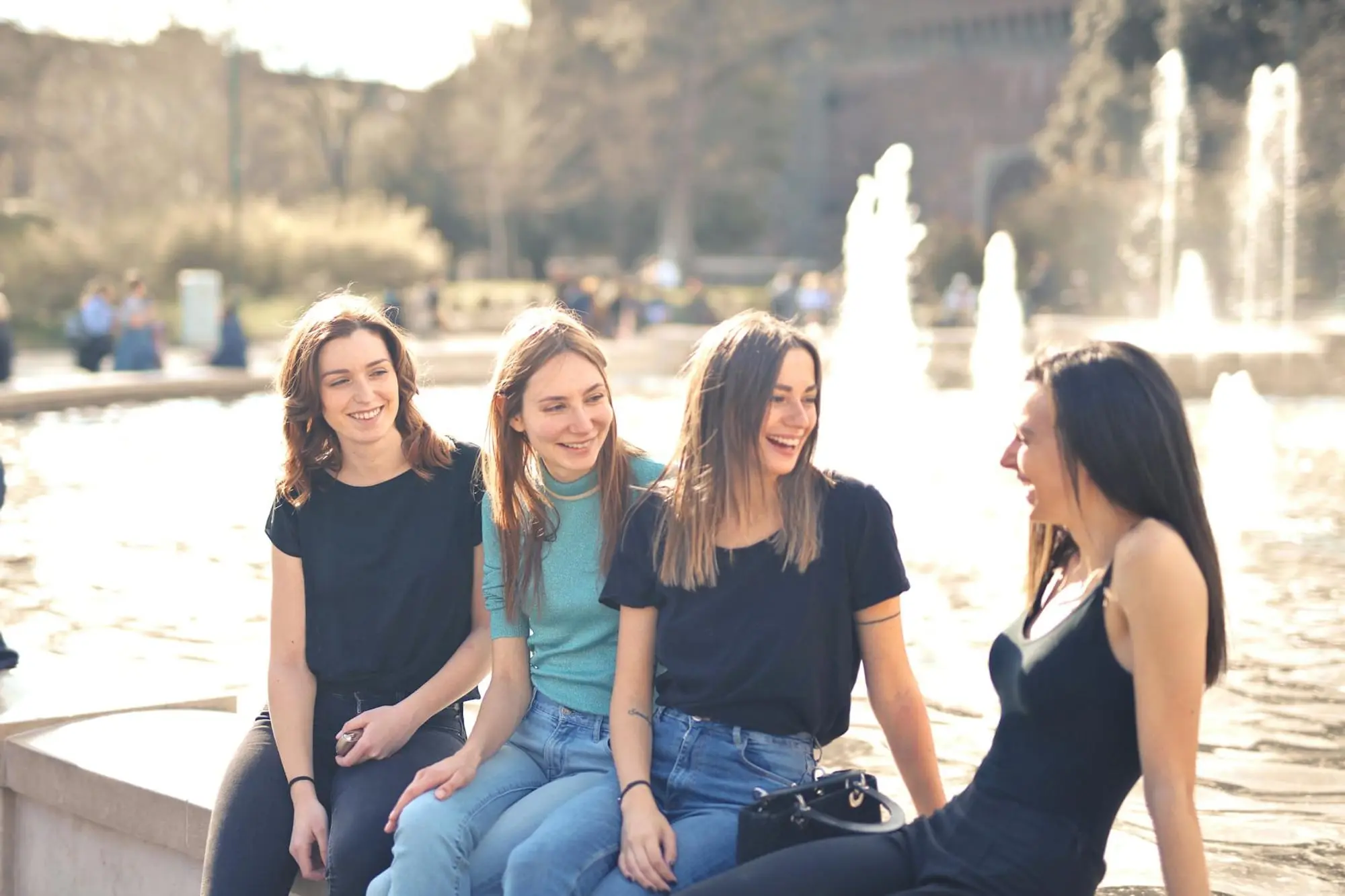
Jennifer Aniston was famously known for her rigorous workout routines and pristine eating habits, but when she turned 50, the Friends star made a surprising revelation. In interviews with Harper’s Bazaar and People, she credited her incredible vitality not just to her fitness regimen with trainer Leyon Azubuike, but to something far more fundamental: her tight-knit circle of friends.
“My girlfriends and I, we’ve been through everything together,” Aniston shared during a candid conversation about aging gracefully. “We laugh until our stomachs hurt, we cry together, we celebrate each other’s wins.” What she didn’t realize at the time was that her instinct to prioritize these relationships was actually adding precious years to her life.
The Science Behind Social Longevity is Staggering
Recent groundbreaking research from Harvard’s Grant Study, which followed participants for over 80 years, confirms what Jennifer Aniston intuited: strong social connections are more predictive of longevity than cholesterol levels, blood pressure, or even smoking habits. According to the study’s findings published in Harvard Health, people with robust social ties live an average of 2.8 years longer than those who are socially isolated.
Dr. Robert Waldinger, the study’s current director, found that loneliness impacts mortality risk equivalent to smoking 15 cigarettes daily. The data is so compelling that major health organizations now classify social isolation as a public health epidemic, comparable to obesity in its deadly effects.
Celebrity trainer Harley Pasternak, who has worked with stars like Lady Gaga and Halle Berry, incorporates this wisdom into his holistic approach to wellness. “I tell all my clients that their social calendar is as important as their workout schedule,” Pasternak told Shape magazine. “You can have perfect nutrition and exercise daily, but without meaningful connections, you’re missing a crucial piece of the longevity puzzle.”
Quality Trumps Quantity in Your Social Circle
The research reveals a fascinating paradox: having thousands of Instagram followers or hundreds of Facebook friends doesn’t move the needle on longevity. What matters is the depth and quality of your relationships.
Oprah Winfrey exemplifies this principle perfectly. Despite her global fame and countless acquaintances, she’s consistently spoken about her core group of close friends – including Gayle King and Maria Shriver – as her emotional anchors. “I have a small circle, but they’re my people,” Winfrey shared during a SuperSoul Sunday episode.
Studies from The Journal of Health and Social Behavior show that having just 3-5 truly close relationships provides the maximum longevity benefits. These connections need to be reciprocal, where you both give and receive emotional support, practical help, and genuine care.
The quality markers that researchers identify in longevity-boosting relationships include:
- Regular, meaningful communication beyond surface-level topics
- Mutual trust and the ability to be vulnerable
- Shared experiences and memories that create lasting bonds
- Physical presence during important life moments
- Active listening without judgment during difficult times
- Celebration of each other’s successes without competition
- Practical support during challenging periods

Your Brain Gets a Powerful Anti-Aging Boost
The neurological benefits of strong social connections read like a fountain of youth prescription. When we engage in meaningful social interactions, our brains release oxytocin, often called the “bonding hormone,” which directly counters the stress hormone cortisol.
According to research from UCLA published in Psychoneuroendocrinology, people with strong social networks show measurably less inflammation in their bodies. Chronic inflammation is now recognized as a key driver of aging and age-related diseases including heart disease, diabetes, and Alzheimer’s.
Actress and wellness entrepreneur Gwyneth Paltrow has built her entire Goop empire around holistic health, but she frequently credits her longevity to her close friendships. “When I’m with my girlfriends, I can feel the stress leaving my body,” Paltrow told Vogue. “There’s something magical about being truly seen and understood.”
Brain imaging studies show that socially connected individuals have larger, more active prefrontal cortexes – the brain region responsible for executive function, memory, and emotional regulation. They also show slower cognitive decline as they age, with some studies indicating up to 70% less risk of developing dementia.
Physical Health Benefits Mirror Mental Wellness
The physical health impacts of strong social connections are measurable and dramatic. Research published in PLOS Medicine analyzed data from over 300,000 participants and found that people with adequate social relationships had a 50% increased likelihood of survival compared to those with poor or insufficient social relationships.

Tennis champion Serena Williams has spoken openly about how her support system, including her husband Alexis Ohanian and close friends like Caroline Wozniacki, helped her through challenging health complications after childbirth. “Having people who love you unconditionally – that’s healing medicine,” Williams shared in an interview with Women’s Health.
The physiological mechanisms behind these benefits include:
- Lower blood pressure and reduced cardiovascular disease risk
- Stronger immune system function with higher resistance to infections
- Better sleep quality and more restorative rest patterns
- Reduced chronic pain and faster recovery from injuries
- Lower rates of depression and anxiety disorders
- Improved hormone regulation, including better stress management
Personal trainer and wellness expert Tracy Anderson, who has worked with Madonna and Gwyneth Paltrow, incorporates group fitness sessions into her methodology specifically for the social benefits. “When people work out together, they push each other harder and recover faster,” Anderson explained to Self magazine. “The social element amplifies every physical benefit.”
Building and Nurturing Longevity-Boosting Relationships
Creating these life-extending connections requires intentionality, especially in our increasingly digital world. The most effective strategies mirror what we see from celebrities who’ve maintained decades-long friendships despite demanding careers.
Reese Witherspoon and her college friends still maintain their group chat and annual reunions, despite her Hollywood success. She’s shared on social media how these friendships keep her grounded and provide perspective that no amount of professional success could replace.
The key is consistency over intensity. Research shows that regular, smaller interactions build stronger bonds than occasional grand gestures. This could mean weekly phone calls, monthly coffee dates, or shared activities like fitness classes or book clubs.
| Connection Type | Longevity Impact | Time Investment Required |
|---|---|---|
| 1-2 Best Friends | +2.8 years average | 2-3 hours weekly each |
| Close Family Bonds | +1.9 years average | 1-2 hours weekly |
| Community Involvement | +1.2 years average | 2-4 hours monthly |
| Romantic Partnership | +3.1 years average | Daily interaction |
Modern technology can support but shouldn’t replace in-person connections. Video calls provide more bonding benefits than texts, but nothing replaces physical presence for the deepest relationships.
The investment feels overwhelming until you reframe it: you’re literally adding years to your life while making those years infinitely more enjoyable. Jennifer Aniston’s glowing vitality at 54 isn’t just about her skincare routine or Pilates sessions with instructor Mandy Ingber – it’s about the laughter, support, and deep connections that fuel her from within.
When we prioritize relationships with the same dedication we give to our workout schedules or meal prep, we unlock the most powerful longevity tool humans possess: each other.
—
How many close friends do I need for longevity benefits?
Research indicates that 3-5 truly close relationships provide maximum longevity benefits. Quality matters far more than quantity – having hundreds of acquaintances won’t impact your lifespan like having a few deep, meaningful connections will.
Can online relationships provide the same longevity benefits as in-person connections?
While digital connections offer some benefits, in-person relationships provide superior longevity advantages. Physical presence triggers hormonal responses and stress reduction that video calls can’t fully replicate, though virtual connections are valuable supplements.
What if I’m naturally introverted – do I still need social connections for longevity?
Absolutely, but the approach can differ. Introverts often thrive with fewer, deeper relationships rather than large social circles. One or two extremely close bonds can provide the same longevity benefits as a larger network.
How quickly can building new social connections impact my health?
Studies show measurable stress reduction and immune system improvements within weeks of forming new meaningful connections. However, the full longevity benefits typically develop over months to years as relationships deepen and trust builds.
You might also like