“Resistance training isn’t just about building muscle—it’s about building the foundation for lifelong health,” celebrity trainer Magnus Lygdback told Men’s Health in a recent interview. The Swedish trainer, who has worked with stars like Alicia Vikander and Gal Gadot, emphasizes that bone density should be a priority for everyone, not just aging populations.
New research confirms what fitness experts have long suspected: resistance training stands above all other forms of exercise for building bone density. A 2024 study published in the Journal of Bone and Mineral Research found that resistance training increased bone mineral density by an average of 2.8% over 12 months—significantly outperforming cardio, yoga, and even high-impact activities.
The Science Behind Resistance Training and Bone Health
According to research from Harvard Medical School, bones respond to mechanical stress by becoming stronger and denser. This process, called Wolff’s Law, explains why resistance training creates such dramatic improvements in bone health.
Dr. Miriam Nelson’s groundbreaking research at Tufts University demonstrated that postmenopausal women who performed resistance training twice weekly for one year increased their bone density by 1% while the control group lost 2.5%. The implications extend far beyond older populations—bone density peaks in our twenties and gradually declines thereafter.
Celebrity trainer Gunnar Peterson, who has worked with the Kardashian family and numerous professional athletes, consistently incorporates compound movements into his clients’ routines. “Heavy, multi-joint exercises create the kind of stress that bones need to adapt and strengthen,” Peterson told Shape magazine.
Why Other Exercises Fall Short
While activities like running, cycling, and swimming offer cardiovascular benefits, they don’t provide the mechanical loading necessary for optimal bone formation. According to the American College of Sports Medicine, weight-bearing exercises must involve forces greater than those encountered in daily activities to stimulate bone growth.
Yoga and Pilates, while excellent for flexibility and core strength, typically don’t provide sufficient resistance to maximize bone density improvements. Research from the University of California, Los Angeles found that while yoga practitioners showed better balance and reduced fall risk, bone density changes were minimal compared to resistance training groups.
High-impact activities like jumping and plyometrics do provide bone-building benefits, but they’re not suitable for everyone and carry higher injury risks. Resistance training offers a scalable, progressive approach that can be adapted for any fitness level.

The Most Effective Bone-Building Exercises
Celebrity trainer Don Saladino, who has trained Ryan Reynolds and Blake Lively, emphasizes compound movements that work multiple muscle groups simultaneously. “The best exercises for bone health are the ones that allow you to progressively overload while maintaining perfect form,” Saladino explained to Men’s Health.
Research consistently identifies these exercises as most effective for bone density:
- Squats and variations – Target the spine, hips, and legs where fractures are most common
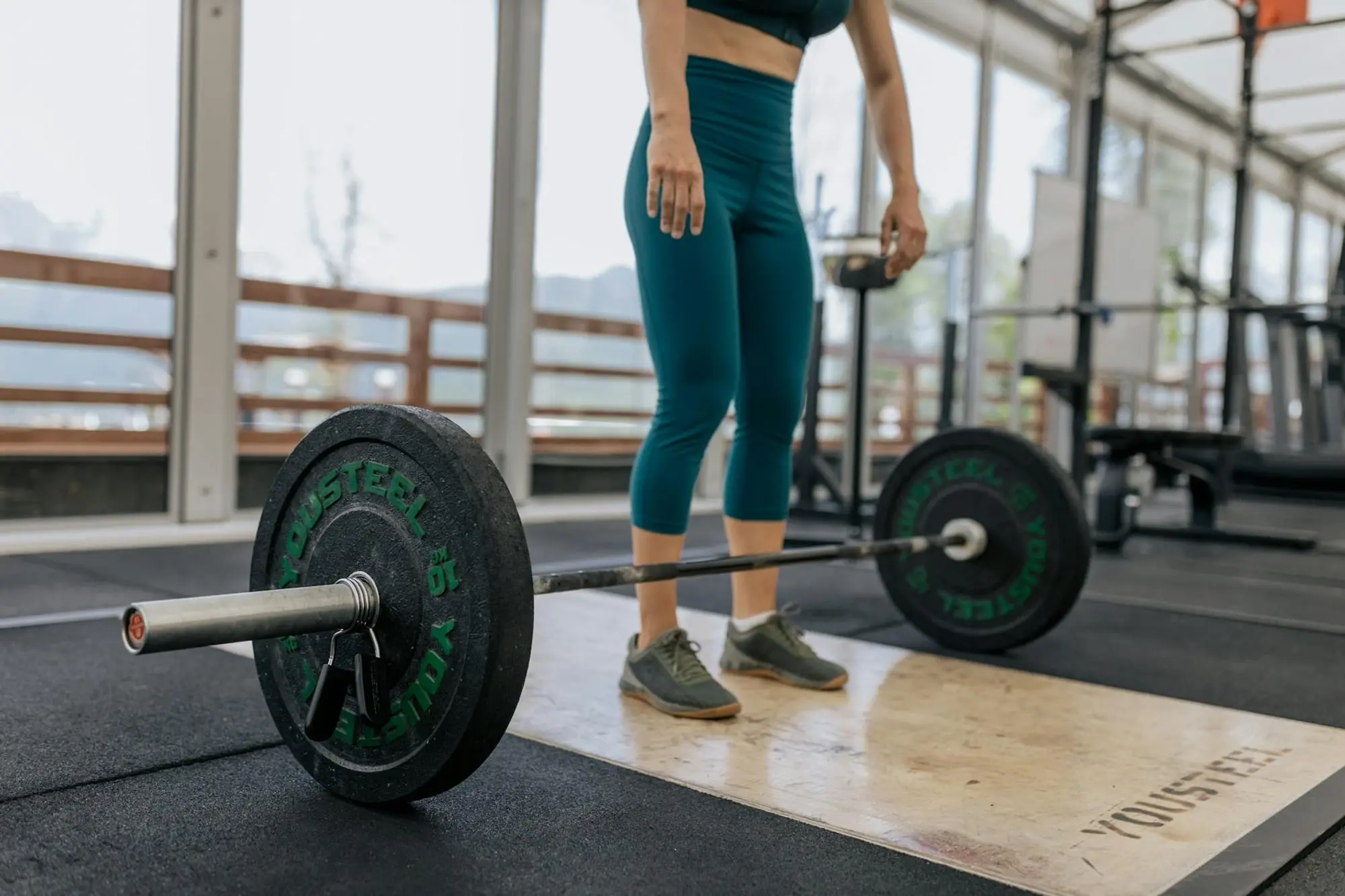
- Deadlifts – Create massive loading through the entire posterior chain
- Overhead pressing – Build density in the spine and shoulders
- Rows and pull-ups – Strengthen the upper back and arms
- Lunges and step-ups – Provide unilateral loading for hip and spine health
- Weighted carries – Combine spinal loading with functional movement patterns
According to a 2023 study in Sports Medicine, these compound movements generated 40% greater bone formation markers compared to isolation exercises.
What the Experts Recommend
The National Osteoporosis Foundation recommends resistance training 2-3 times per week, targeting all major muscle groups. However, the specifics matter enormously for bone health outcomes.
Progressive overload is non-negotiable. Tracy Anderson, celebrity trainer known for her work with Gwyneth Paltrow and Madonna, has evolved her training philosophy to include heavier resistance work as clients age. “Light weights and high reps have their place, but bone health requires challenging loads,” Anderson told Vogue.
Training intensity should reach 70-85% of one-repetition maximum for optimal bone formation. This doesn’t mean training to failure every session, but rather using weights that challenge the musculoskeletal system significantly.
Research from Penn State University found that training frequency matters less than total weekly volume and intensity. Two high-quality sessions per week produced similar bone density improvements to three moderate sessions.
| Training Variable | Bone Density Recommendation | Rationale |
|---|---|---|
| Frequency | 2-3 sessions per week | Allows recovery while maintaining stimulus |
| Intensity | 70-85% of 1RM | Provides sufficient mechanical stress |
| Volume | 6-8 exercises, 3-4 sets each | Targets all major bone-bearing areas |
| Progression | Increase load 2-5% weekly | Maintains adaptive stimulus over time |

Making It Work for Your Lifestyle
Celebrity trainer Harley Pasternak, who has worked with Rihanna and Jessica Simpson, advocates for consistency over perfection. “The best bone-building program is the one you’ll actually follow long-term,” Pasternak told People magazine.
Starting with bodyweight variations and gradually adding external load allows anyone to begin this journey safely. Even experienced exercisers should prioritize movement quality over heavy weights initially.
Home gym options have expanded dramatically. Peloton’s strength classes, Nike Training Club’s resistance workouts, and adjustable dumbbell systems make bone-building exercise accessible without gym memberships.
The key lies in progressive overload—gradually increasing the challenge to your musculoskeletal system. This could mean adding weight, increasing repetitions, or progressing to more challenging exercise variations.
Magnus Lygdback emphasizes that bone health benefits extend far beyond fracture prevention. “Clients who prioritize resistance training report better posture, reduced back pain, and increased confidence in daily activities,” he noted in a recent interview with Women’s Health.
Research from the Mayo Clinic confirms these observations, showing that resistance training participants experienced 30% fewer falls and 40% reduction in back pain complaints compared to aerobic exercise groups.
The evidence is clear: while all exercise provides health benefits, resistance training stands alone in its ability to build and maintain bone density throughout life. For celebrities and everyday individuals alike, this represents one of the most important investments in long-term health and vitality.
How often should I resistance train for bone health benefits?
Research supports 2-3 sessions per week, allowing at least 48 hours between sessions targeting the same muscle groups. Consistency matters more than frequency—two quality sessions sustained long-term beat sporadic intense training.
Can I build bone density if I’m already over 50?
Absolutely. Studies show significant bone density improvements in people well into their 70s and 80s. While younger individuals see faster gains, the bone-building response to resistance training remains robust throughout life.
Do I need heavy weights to see bone benefits?
You need challenging weights relative to your current strength level. This typically means loads requiring maximum effort for 6-12 repetitions. Bodyweight exercises can be effective for beginners, but progression to external resistance is usually necessary.
How long before I see bone density improvements?
Most studies show measurable improvements within 6-12 months of consistent training. However, strength gains and functional improvements often appear within 4-8 weeks, indicating positive adaptations are occurring.
You might also like