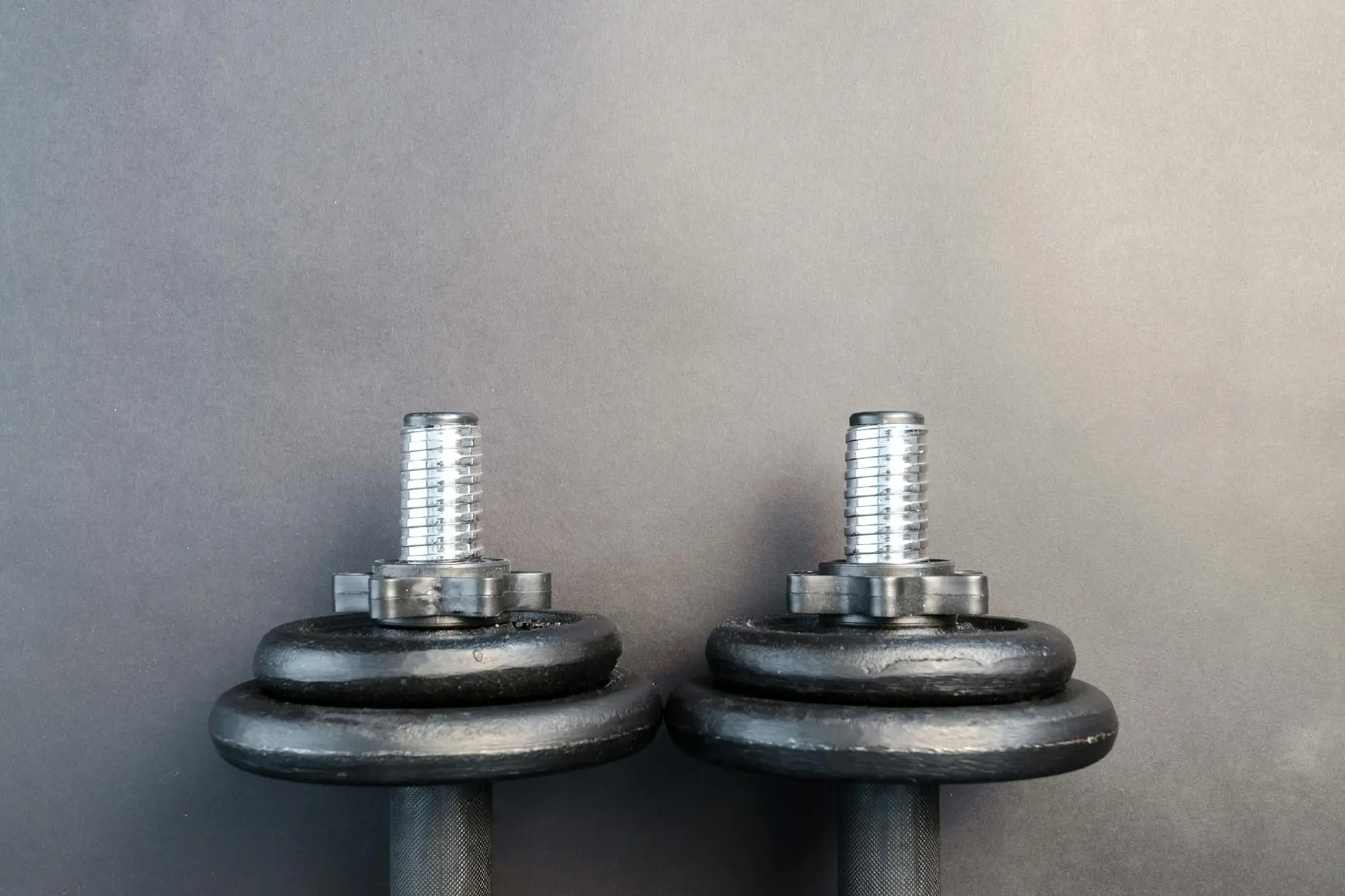
“The beauty of dumbbells is their simplicity and versatility,” celebrity trainer Gunnar Peterson told Men’s Health. “You can literally transform your entire physique with just a set of weights and the right programming.” This philosophy has become the foundation for countless success stories, particularly among women who’ve discovered the transformative power of resistance training.
The dumbbell revolution in women’s fitness represents more than just a workout trend—it’s a fundamental shift toward functional, accessible strength training. According to the American Council on Exercise, women who incorporate progressive resistance training see measurable improvements in bone density, metabolic rate, and overall body composition within just 12 weeks.
The Science Behind Dumbbell Transformation
Research from the University of Alabama at Birmingham reveals that women who strength train with free weights burn up to 100 more calories in the 24 hours following their workout compared to those doing cardio alone. This phenomenon, known as excess post-exercise oxygen consumption (EPOC), explains why dumbbells have become the secret weapon for sustainable body transformation.
Harley Pasternak, who has trained celebrities like Jessica Simpson and Lady Gaga, emphasizes the metabolic advantages of dumbbell training. “When you lift weights, you’re not just burning calories during the workout,” Pasternak explained to Shape magazine. “You’re creating a metabolic boost that lasts for hours afterward.”
The physiological changes extend beyond calorie burn. A 2023 study published in the Journal of Strength and Conditioning Research found that women following a 16-week dumbbell program experienced:
| Metric | Average Improvement | Timeframe |
|---|---|---|
| Muscle Mass | 8-12% increase | 12-16 weeks |
| Bone Density | 3-5% improvement | 16-20 weeks |
| Metabolic Rate | 7-10% boost | 8-12 weeks |
Why Dumbbells Work Better Than Machines
Celebrity trainer Tracy Anderson, known for her work with Gwyneth Paltrow and Jennifer Lopez, advocates for free weights over machine-based training. “Dumbbells force your stabilizing muscles to work,” Anderson told Vogue. “This creates functional strength that translates to real-world movement patterns.”
The instability inherent in dumbbell exercises activates multiple muscle groups simultaneously, creating what exercise physiologists call “co-contraction.” According to the National Strength and Conditioning Association, this phenomenon leads to greater overall muscle recruitment compared to fixed-plane machine exercises.

Dumbbells also address the common concern many women have about “bulking up.” Research from McMaster University demonstrates that women’s hormonal profiles naturally favor lean muscle development over mass gain when following moderate-weight, higher-repetition protocols.
Building a Dumbbell-Based Transformation Program
Don Saladino, who trains celebrities like Blake Lively and Ryan Reynolds, emphasizes progressive overload as the key to dumbbell success. “Start with weights that challenge you for 12-15 repetitions,” Saladino advised Women’s Health. “When that becomes easy, increase the weight by 2.5 to 5 pounds.”
The most effective dumbbell programs incorporate compound movements that work multiple muscle groups:
- Dumbbell deadlifts – targets hamstrings, glutes, and core
- Goblet squats – engages quads, glutes, and stabilizing muscles
- Dumbbell rows – strengthens back, biceps, and rear deltoids
- Overhead press – develops shoulders, triceps, and core stability
- Walking lunges – builds unilateral leg strength and balance
- Chest press variations – works pectorals, triceps, and front deltoids
According to the American College of Sports Medicine, women should aim for 2-3 strength training sessions per week, allowing 48-72 hours of recovery between sessions targeting the same muscle groups.
What the Experts Recommend
Celebrity trainer Gunnar Peterson structures his dumbbell programs around what he calls “movement patterns, not muscle isolation.” His approach, detailed in Muscle & Fitness, focuses on functional exercises that mirror daily activities.
The Nike Training Club app, developed with input from elite trainers, recommends starting with bodyweight movements before progressing to dumbbell variations. This progression helps establish proper form and neuromuscular coordination before adding external resistance.
Peloton’s strength instructors, including popular trainer Rebecca Kennedy, advocate for the “time under tension” principle with dumbbells. This involves controlling both the lifting and lowering phases of each exercise to maximize muscle fiber recruitment.

Research from the International Journal of Sports Medicine supports a periodized approach to dumbbell training. This involves cycling through phases of different intensities and rep ranges every 4-6 weeks to prevent plateaus and continue progress.
The Mental Health Connection
The psychological benefits of dumbbell training often prove as transformative as the physical changes. Dr. Shawn Arent from Rutgers University published findings showing that women who engage in regular strength training report significant improvements in self-efficacy and body image perception.
Tracy Anderson notes this phenomenon in her celebrity clients. “When women feel strong physically, it translates to confidence in every area of their lives,” she told Harper’s Bazaar. “Strength training with dumbbells provides tangible proof of progress and capability.”
The American Psychological Association has documented the connection between resistance training and reduced symptoms of anxiety and depression, particularly in women. The act of progressively lifting heavier weights creates a sense of accomplishment that extends beyond the gym environment.
Celebrity trainer Jillian Michaels, known for her work on “The Biggest Loser,” emphasizes this mind-body connection in her training philosophy. “Physical strength builds mental resilience,” Michaels explained to People magazine. “Every rep completed is proof of what you’re capable of achieving.”
Creating Long-Term Success
The sustainability of dumbbell-based transformation lies in its accessibility and scalability. Unlike gym machines or complex equipment, dumbbells can be used anywhere and adapted to any fitness level. According to fitness industry data from IHRSA, home gym equipment sales increased by 170% in 2020, with dumbbells leading the category.
Progressive overload remains the cornerstone of continued success. The National Academy of Sports Medicine recommends increasing training variables in this order: frequency first, then volume, and finally intensity. This approach minimizes injury risk while maximizing adaptation.
Celebrity transformations like those of Jessica Biel, who worked with trainer Jason Walsh using primarily dumbbell-based routines, demonstrate the long-term effectiveness of this approach. Walsh told Men’s Health that consistency with basic movements trumps complex programming every time.
Recovery and nutrition play equally important roles in the transformation process. According to the International Society of Sports Nutrition, women engaged in regular strength training should consume 1.6-2.2 grams of protein per kilogram of body weight daily to support muscle protein synthesis.
The success stories continue to multiply as more women discover the empowering nature of strength training. From Hollywood A-listers to everyday fitness enthusiasts, the dumbbell transformation represents more than physical change—it’s a journey toward strength, confidence, and long-term wellness.
How heavy should dumbbells be for beginners?
Start with 5-10 pound dumbbells for upper body exercises and 15-20 pounds for lower body movements. Focus on proper form before increasing weight, and aim for 12-15 repetitions per set initially.
How often should women do dumbbell workouts?
The American College of Sports Medicine recommends 2-3 strength training sessions per week, with 48-72 hours of rest between sessions targeting the same muscle groups to allow for proper recovery and adaptation.
Can dumbbells alone transform your entire body?
Yes, according to research from the University of Alabama. Dumbbell training can improve muscle mass, bone density, and metabolic rate when combined with proper nutrition and progressive overload principles over 12-16 weeks.
What’s the difference between dumbbells and barbells for women?
Dumbbells offer greater range of motion, unilateral training benefits, and improved muscle balance compared to barbells. They also require more stabilization, leading to increased core engagement and functional strength development.
You might also like