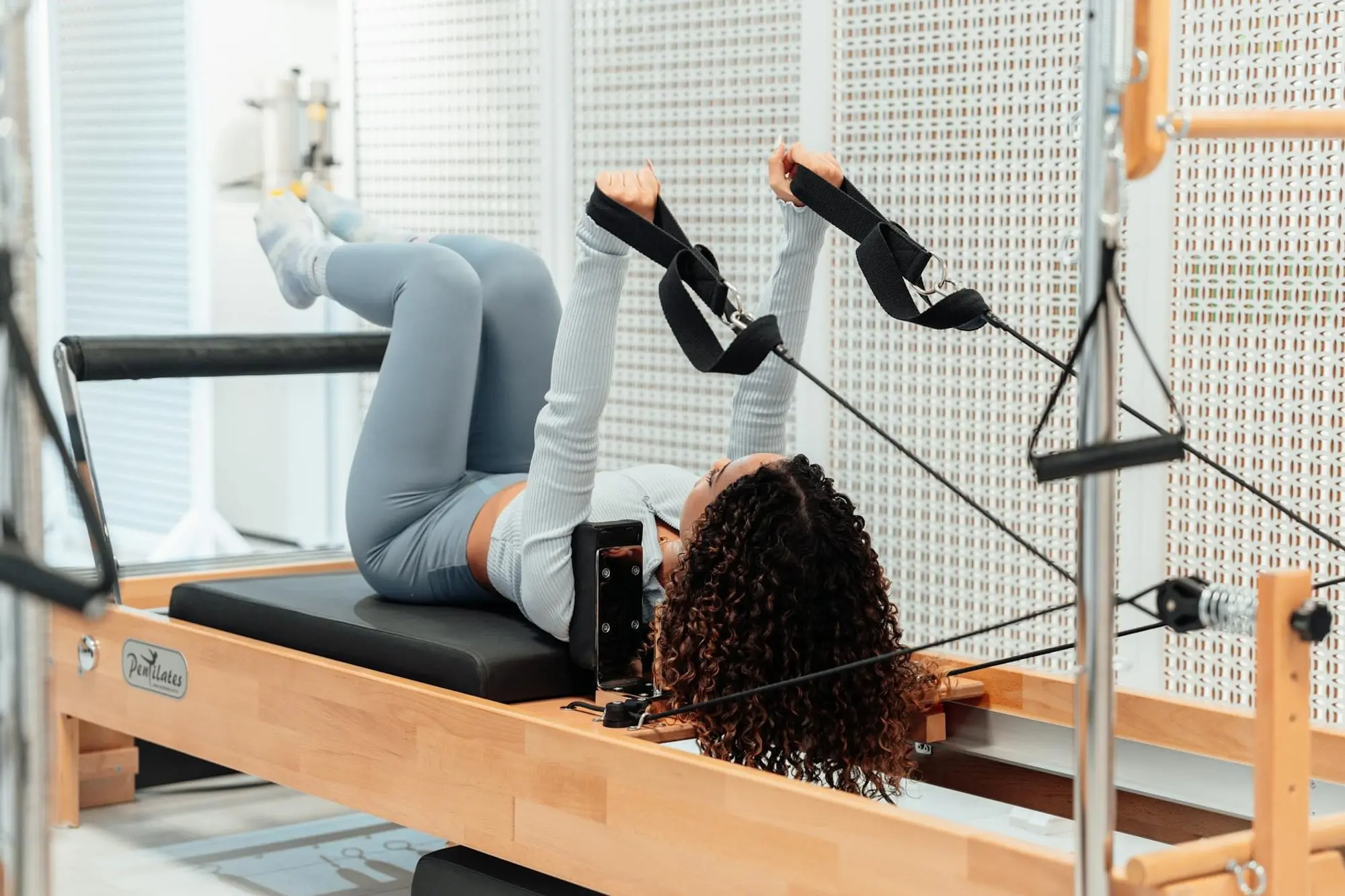
The sweat was already beading on Jennifer Aniston’s forehead just fifteen minutes into her morning Pilates session, her muscles trembling as she held a challenging plank variation that looked deceptively simple. “I thought I was in good shape until I tried this flow,” the actress admitted in a recent interview with Shape magazine, describing her first encounter with a particularly intense mat-based routine that her longtime trainer Mandy Ingber had designed.
What started as a “quick 30-minute session” turned into a full-body awakening that left every muscle group shaking—from her deep core stabilizers to muscles she didn’t even know existed. According to Ingber, who has worked with celebrities like Helen Hunt and Brooke Shields, this type of comprehensive Pilates flow represents the perfect storm of efficiency and intensity that busy A-listers crave.
The beauty of this particular workout lies not in fancy equipment or studio memberships, but in the humble yoga mat beneath your feet and the precise, methodical movements that target every inch of your body simultaneously.
The Science Behind the Shake
When your muscles start trembling during a challenging Pilates flow, that’s not a sign of weakness—it’s actually your body’s way of adapting to new demands. Research shows that muscle fatigue occurs when your body recruits additional motor units to maintain proper form, creating that distinctive shake that signals you’re working at your edge.
Tracy Anderson, the celebrity trainer behind Madonna’s sculpted physique, explains that this muscular response indicates you’re creating the micro-tears necessary for strength building and muscle definition. “The shake means you’re accessing muscles that have been dormant,” Anderson told Women’s Health in a recent feature about effective home workouts.
A 2024 study published in the Journal of Strength and Conditioning Research found that mat-based Pilates routines can improve core strength by up to 38% in just eight weeks. The key lies in the method’s emphasis on controlled, precise movements that challenge your stability and endurance simultaneously.
Essential Elements of an Effective Full-Body Flow
The most effective 30-minute Pilates routines follow a strategic progression that warms up your body, challenges multiple muscle groups, and creates that coveted full-body burn. Celebrity trainer Don Saladino, who works with Ryan Reynolds and Blake Lively, emphasizes that successful at-home workouts must hit several key components within their limited timeframe.
Your complete mat session should include these fundamental elements:
- Dynamic warm-up movements that activate your core and increase blood flow
- Standing balance challenges that engage your entire kinetic chain
- Core-intensive sequences targeting deep stabilizing muscles
- Upper body strengthening using your own body weight as resistance
- Lower body sculpting with emphasis on glutes and thighs
- Integrated movements that combine multiple muscle groups
- Cool-down stretches that maintain flexibility and prevent stiffness
The magic happens when these elements flow seamlessly together, creating what Pilates founder Joseph Pilates originally called “the complete coordination of body, mind, and spirit.”

Breaking Down the 30-Minute Structure
Professional Pilates instructors recommend dividing your half-hour session into distinct phases that maximize both efficiency and results. According to Cassey Ho, the fitness entrepreneur behind Blogilates and Pop Pilates, this structured approach ensures you’re getting comprehensive benefits without wasting precious time.
The first five minutes should focus on gentle activation—think cat-cow stretches, pelvic tilts, and breath work that prepares your body for more intense challenges ahead. This phase might seem too easy, but it’s crucial for injury prevention and proper muscle recruitment.
Minutes six through twenty represent your main event, where you’ll cycle through challenging sequences that target different body regions while maintaining constant core engagement. This is where celebrities like Meghan Markle, who practiced Pilates regularly before her royal wedding, experience that signature muscle shake that signals serious work happening.
The final five minutes transition into recovery and lengthening, helping your body return to baseline while maintaining the flexibility gains you’ve earned through your effort.
Modifications for Every Fitness Level
One of the most appealing aspects of mat-based Pilates is its incredible adaptability to different fitness levels and physical limitations. Harley Pasternak, who has trained celebrities including Lady Gaga and Ariana Grande, frequently emphasizes that effective workouts must be scalable to meet people where they are.
Beginners can modify challenging movements by reducing range of motion, taking breaks between exercises, or performing easier variations of complex movements. For instance, a full teaser can become a bent-knee version, while challenging plank variations can be performed from the knees.
Advanced practitioners can intensify the same basic flow by adding pauses at challenging points, increasing repetitions, or incorporating more complex movement patterns that demand greater coordination and strength.

Creating Your Home Practice Space
The minimal equipment requirements of mat Pilates make it incredibly accessible, but creating an environment conducive to focus and effort can significantly impact your results. According to Pilates instructor and author Brooke Siler, the space where you practice should feel both comfortable and energizing.
All you truly need is a quality exercise mat that provides adequate cushioning for your spine while maintaining stability for standing movements. Many celebrities, including Jessica Alba, have shared glimpses of their simple home setups on social media—often just a mat in a quiet corner with enough space to extend arms and legs fully.
| Workout Component | Time Allocation | Primary Benefits |
|---|---|---|
| Warm-up & Activation | 5 minutes | Injury prevention, muscle preparation |
| Main Flow Sequences | 20 minutes | Strength building, muscle endurance |
| Cool-down & Stretching | 5 minutes | Flexibility, recovery, relaxation |
The consistency of your practice matters more than the perfection of your space. Even A-list celebrities like Reese Witherspoon have been photographed doing Pilates in hotel rooms, proving that commitment trumps convenience when it comes to maintaining your fitness routine.
This approach to full-body conditioning represents something beautifully democratic about fitness—the same movements that help celebrities maintain their red-carpet-ready physiques are available to anyone with thirty minutes and the determination to push through that telltale muscle shake. When your body trembles during that final set of hundred pulses or your arms quiver through one more push-up variation, you’re experiencing the same sensation that has helped countless stars build the strength and confidence that radiates from within.
How often should I do this 30-minute Pilates flow?
Most fitness experts recommend 3-4 times per week for optimal results, allowing rest days for muscle recovery and adaptation.
Is it normal for my muscles to shake during the workout?
Absolutely—muscle shaking indicates you’re working at an appropriate intensity level and challenging your neuromuscular system effectively.
Can beginners safely attempt this full-body flow?
Yes, with proper modifications and attention to form over speed. Start slowly and progress gradually as your strength improves.
What should I do if I can’t complete the full 30 minutes?
Break it into shorter segments throughout the day, or modify exercises to match your current fitness level rather than skipping entirely.