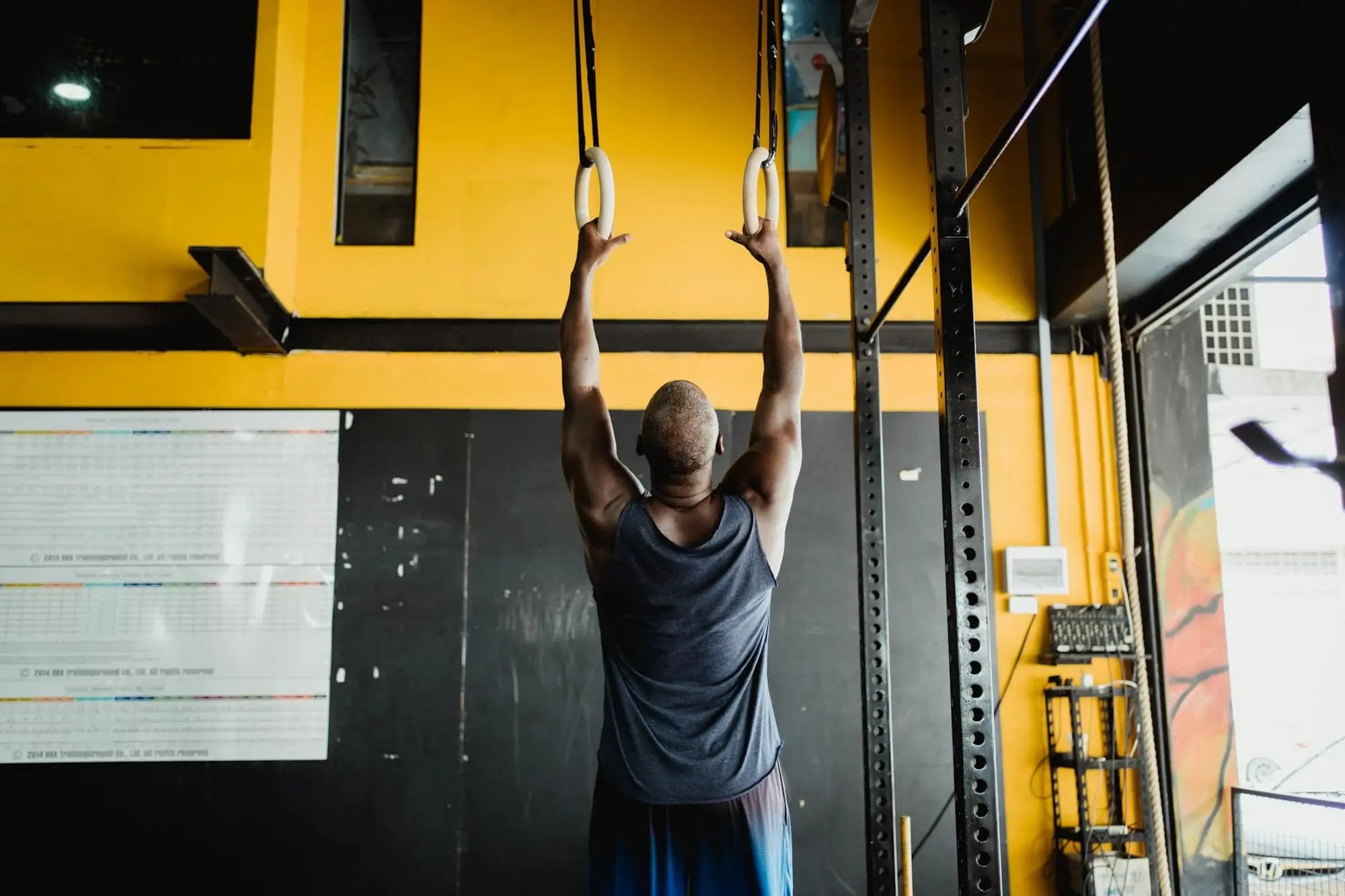
“The secret to consistency isn’t willpower—it’s having a system that makes showing up easier than not showing up,” Jillian Michaels told Women’s Health in a recent interview about maintaining fitness routines after 50. At 50 herself, the celebrity trainer continues to demonstrate remarkable strength and endurance, crediting her success to strategic habit formation rather than relying on motivation alone.
This philosophy resonates deeply with fitness enthusiasts who struggle to maintain consistency as they age. The ability to perform 10 pull-ups at any age represents significant upper body and core strength, but achieving this milestone at 63 requires more than just physical capability—it demands unwavering commitment to showing up, even when motivation wanes.
The Psychology Behind Workout Consistency
According to research from Stanford University’s Behavior Design Lab, habit formation is more powerful than motivation for long-term fitness success. The study found that individuals who focused on creating automatic behaviors were 3.2 times more likely to maintain their exercise routines after six months compared to those relying solely on willpower.
Celebrity trainer Harley Pasternak, who has worked with Jessica Simpson and Megan Fox, emphasizes this principle with his clients. “The goal is to make exercise so routine that skipping becomes the harder choice,” Pasternak told Shape magazine. This approach becomes increasingly crucial as we age and face more physical and logistical barriers to consistent training.
The key lies in what behavioral scientists call “implementation intentions”—specific if-then plans that remove decision-making from the equation. Research published in the British Journal of Health Psychology showed that 91% of participants who created implementation intentions successfully maintained their exercise habits, compared to only 39% in the control group.
The One Trick That Changes Everything
The transformative strategy that enables consistent pull-up training at any age centers on environmental design and trigger stacking. This involves pairing the desired behavior (pull-up training) with an existing habit that already occurs reliably every day.
Tracy Anderson, Madonna’s longtime trainer, implements this principle by having clients perform strength exercises immediately after their morning coffee routine. “We’re not creating a new habit from scratch,” Anderson explained to Vogue. “We’re attaching it to something that already happens automatically.”

For pull-up training specifically, this might mean installing a doorway pull-up bar in a high-traffic area of the home and committing to perform assisted pull-ups every time you pass through that doorway. According to Healthline, this “micro-workout” approach can be particularly effective for building strength progressively without the intimidation factor of formal gym sessions.
The genius lies in reducing friction—the effort required to begin the behavior. Research from the University of Southern California found that people are 75% more likely to exercise when equipment is visible and easily accessible compared to when it requires setup or travel time.
Progressive Training Methods for Mature Athletes
Building pull-up strength at 63 requires a methodical approach that prioritizes joint health alongside muscle development. Don Saladino, who trains Blake Lively and Ryan Reynolds, advocates for progressive overload principles adapted for mature athletes.
The training progression typically follows this evidence-based sequence:
- Negative pull-ups: Focus on the lowering phase for 3-5 seconds
- Assisted pull-ups: Use resistance bands or assisted pull-up machines
- Dead hangs: Build grip strength and shoulder stability
- Incline rows: Develop pulling muscles with adjustable difficulty
- Scapular pull-ups: Strengthen the often-neglected upper back muscles
- Partial range pull-ups: Build strength in specific ranges of motion
- Full pull-ups: The culmination of progressive training
According to the American Council on Exercise, this progression typically takes 8-12 weeks for individuals with moderate fitness levels, though the timeline extends with age due to longer recovery requirements.
| Training Phase | Duration | Weekly Frequency | Key Focus |
|---|---|---|---|
| Foundation Building | 3-4 weeks | 3-4 sessions | Dead hangs, negatives |
| Strength Development | 4-6 weeks | 4-5 sessions | Assisted pull-ups, rows |
| Skill Integration | 2-3 weeks | 3-4 sessions | Partial and full pull-ups |
What the Experts Recommend
Gunnar Peterson, who has trained Jennifer Lopez and Sofia Vergara, emphasizes that consistency trumps intensity for mature athletes. “A 63-year-old doing three pull-ups four times per week will outperform someone doing ten pull-ups once per week,” Peterson told People magazine.
The expert consensus focuses on several key principles for maintaining pull-up training consistency:
Recovery becomes paramount with age. Research from the Journal of Aging and Physical Activity shows that adults over 60 require 48-72 hours between intense upper body sessions, compared to 24-48 hours for younger individuals. This necessitates careful scheduling and alternating muscle groups.
Joint mobility work is non-negotiable. According to the Mayo Clinic, shoulder and thoracic spine mobility directly impacts pull-up performance and injury prevention. Celebrity trainer Kira Stokes, who works with Candace Cameron Bure, incorporates 10 minutes of mobility work before every strength session.
Nutrition timing affects performance significantly. Research published in the International Journal of Sport Nutrition found that consuming 20-25 grams of protein within 30 minutes post-workout optimized muscle protein synthesis in older adults, crucial for strength gains and recovery.

The Role of Technology and Tracking
Modern fitness technology plays a crucial role in maintaining consistency. According to a 2023 study from the University of Pennsylvania, individuals who tracked their workouts digitally were 2.4 times more likely to maintain their routines beyond six months.
Peloton’s strength training programs and Nike Training Club app both offer pull-up progressions specifically designed for older adults. These platforms provide the accountability and structure that behavioral research shows are essential for habit formation.
The key is finding technology that enhances rather than complicates the routine. Fitness tracker data from Fitbit indicates that users who set simple, binary goals (did the workout or didn’t) showed higher long-term adherence than those tracking complex metrics.
Overcoming Age-Related Challenges
Training at 63 presents unique obstacles that require specific strategies. According to the National Institute on Aging, adults over 60 experience a 3-8% decline in muscle mass per decade, making strength maintenance increasingly important.
Hormonal changes significantly impact recovery and strength gains. Research from Harvard Medical School shows that both men and women experience hormonal shifts that affect muscle protein synthesis, requiring adjusted training approaches.
Sleep quality becomes increasingly crucial. A study published in Sports Medicine found that adults over 60 who maintained 7-9 hours of quality sleep showed 40% better strength gains compared to those sleeping less than 6 hours nightly.
Social support proves vital for consistency. Celebrity trainer Anna Kaiser, who works with Kelly Ripa, emphasizes the importance of workout partners or group classes for mature clients. “Accountability partnerships become more important, not less important, as we age,” Kaiser told Women’s Health.
The most successful mature athletes treat their fitness routine as non-negotiable healthcare rather than optional recreation. This mindset shift, supported by decades of longevity research, transforms exercise from a burden into an investment in future independence and vitality.
Frequently Asked Questions
How long does it typically take to build up to 10 pull-ups starting from zero?
According to the American Council on Exercise, beginners typically require 3-6 months of consistent training to achieve their first unassisted pull-up, with additional months needed to reach 10 repetitions. For adults over 60, this timeline may extend to 6-12 months due to slower recovery rates and the need for more gradual progression.
What’s the most common mistake people make when trying to build pull-up strength?
Fitness expert Jillian Michaels identifies attempting full pull-ups too early as the primary error. Research from the Journal of Strength and Conditioning shows that focusing on negative repetitions and assisted variations for 4-6 weeks builds the necessary strength foundation more effectively than struggling with incomplete full pull-ups.
How often should someone over 60 train pull-ups each week?
According to guidelines from the National Academy of Sports Medicine, adults over 60 should limit intense upper body training to 2-3 sessions per week, allowing 48-72 hours between sessions. This frequency allows adequate recovery while maintaining the consistency necessary for strength gains.
Can women over 60 realistically achieve 10 pull-ups?
Yes, according to research from the Cooper Institute. While women typically start with less upper body strength than men, the relative strength gains possible through consistent training remain significant at any age. Celebrity trainer Tracy Anderson notes that several of her female clients over 60 have achieved double-digit pull-up numbers through progressive training and consistency.
You might also like
 Runner reveals how ditching fitness trackers transformed her marathon training forever