Actor Mel Rodriguez has quietly transformed his physique using nothing but his own bodyweight—and the results are turning heads in Hollywood. The “Last Man on Earth” and “Getting On” star recently revealed his game-changing calisthenics routine that’s helped him shed pounds and build serious functional strength without stepping foot in a traditional gym.
Rodriguez joins a growing list of celebrities like Terry Crews and Stephen Amell who’ve ditched heavy weights for bodyweight training. According to Men’s Health, calisthenics workouts can burn up to 400 calories in just 30 minutes while building lean muscle mass more efficiently than traditional weightlifting.
1. The Foundation: Master These Basic Movement Patterns First
Rodriguez emphasizes that calisthenics success starts with perfecting fundamental movements before attempting advanced variations. His trainer, following principles similar to those used by celebrity fitness expert Don Saladino, focuses on four core patterns that form the backbone of every workout.
The foundation movements include push-ups, pull-ups, squats, and planks—but Rodriguez performs them with military precision. Each rep is controlled, with perfect form taking priority over speed or quantity.
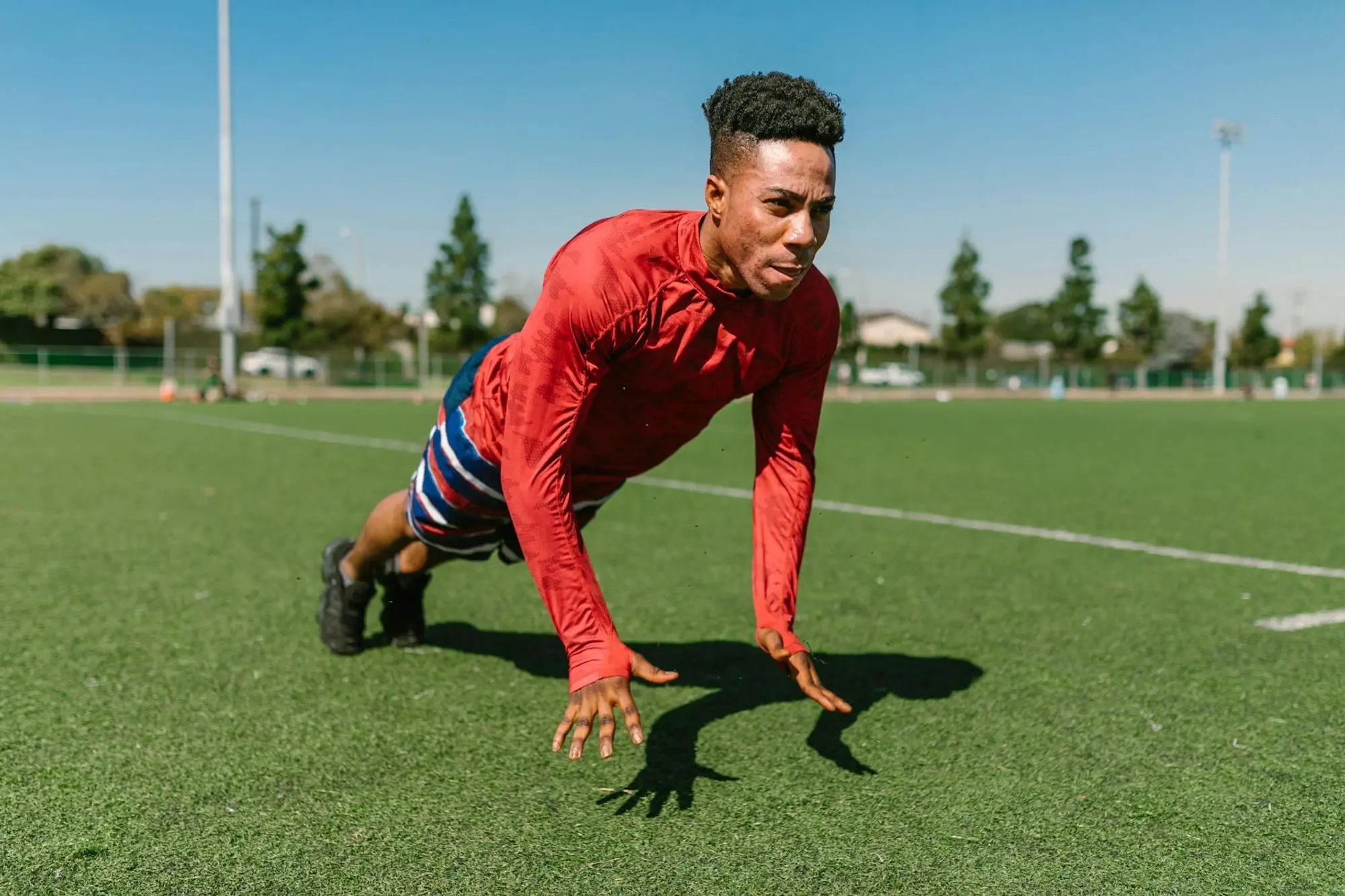
Push-up progressions begin with wall push-ups and advance through incline, standard, decline, and eventually one-arm variations. Rodriguez spent weeks mastering each level before progressing to the next.
Pull-up development started with assisted variations using resistance bands, a method championed by CrossFit athletes worldwide. The progression moves through negative pull-ups, jumping pull-ups, and finally strict pull-ups with various grip positions.
Key foundation exercises Rodriguez swears by:
- Wall push-ups (3 sets of 15-20 reps)
- Assisted pull-ups with bands (3 sets of 8-12 reps)
- Bodyweight squats (3 sets of 15-25 reps)
- Standard planks (3 sets of 30-60 seconds)
2. The Weekly Split That Builds Serious Strength
Rodriguez follows a structured 4-day training split that targets different movement patterns while allowing adequate recovery time. This approach mirrors the methodology used by top calisthenics athletes and ensures balanced muscle development.
Monday and Thursday focus on upper body pushing movements, incorporating various push-up variations and dips. Tuesday and Friday target pulling movements with pull-up progressions and inverted rows.
Active recovery days feature light mobility work and basic movement patterns. Rodriguez incorporates yoga-style stretching sequences, similar to those promoted by celebrity trainer Harley Pasternak for his A-list clients.
The weekly structure prevents overtraining while maintaining consistent stimulus for strength gains. According to research published in the Journal of Sports Science & Medicine, this type of training split optimizes muscle protein synthesis while reducing injury risk.

3. Progressive Overload: Making Bodyweight Training Harder
The biggest challenge in calisthenics is creating progressive overload without adding external weight. Rodriguez solved this by manipulating tempo, range of motion, and leverage rather than simply increasing repetitions.
Tempo manipulation involves slowing down the eccentric (lowering) phase of movements. Rodriguez performs push-ups with a 3-second descent, 1-second pause, and explosive ascent—a technique that dramatically increases muscle tension.
Leverage adjustments make exercises exponentially more challenging. Elevating feet during push-ups, performing single-limb variations, or adjusting hand positions creates new strength demands without requiring equipment.
Progressive overload strategies Rodriguez uses:
- Slow tempo variations (3-1-1 rhythm)
- Single-arm/single-leg progressions
- Elevated foot positions
- Extended range of motion
- Isometric holds at challenging positions
Advanced progressions include archer push-ups, pistol squats, and human flag progressions. These movements require months of consistent training but deliver incredible strength gains and impressive visual results.
4. The Recovery Protocol That Maximizes Results
Rodriguez learned that recovery determines results more than workout intensity. His approach to rest and regeneration follows protocols used by elite athletes and draws inspiration from practices promoted in publications like Shape Magazine.
Sleep optimization takes priority, with Rodriguez maintaining a consistent 7-9 hour sleep schedule. Poor sleep quality can reduce muscle protein synthesis by up to 18%, according to recent exercise science research.
Active recovery sessions include light movement, stretching, and breathing exercises. Rodriguez practices basic yoga flows and meditation, similar to routines followed by actors like Hugh Jackman and Chris Hemsworth.
Nutrition timing supports recovery with protein intake within 30 minutes post-workout. Rodriguez focuses on whole foods and adequate hydration, avoiding the supplement-heavy approach common in traditional bodybuilding.
Recovery essentials in Rodriguez’s routine:
- Consistent sleep schedule (10 PM – 6 AM)
- Daily 10-minute meditation sessions
- Post-workout protein intake (20-30 grams)
- Weekly deep tissue massage or foam rolling
- Regular movement breaks throughout the day

5. The Mind-Body Connection That Changes Everything
Mental approach separates successful calisthenics practitioners from those who plateau early. Rodriguez emphasizes the meditative aspects of bodyweight training, treating each workout as moving meditation rather than just physical exercise.
Breath control coordinates with movement patterns, similar to principles used in Pilates and yoga practices. Rodriguez performs each exercise with deliberate breathing patterns that enhance focus and performance.
Visualization techniques help with form and progression goals. Before attempting challenging movements like one-arm push-ups, Rodriguez mentally rehearses perfect execution—a strategy used by Olympic gymnasts worldwide.
Progress tracking goes beyond counting repetitions to include form quality, tempo control, and subjective difficulty ratings. This comprehensive approach prevents ego-driven training mistakes that lead to injury or plateaus.
| Training Phase | Duration | Focus | Key Exercises |
|---|---|---|---|
| Foundation | 4-6 weeks | Perfect basic movements | Wall push-ups, assisted pull-ups, bodyweight squats |
| Strength Building | 8-12 weeks | Increase difficulty | Standard push-ups, negative pull-ups, single-leg squats |
| Advanced Skills | 12+ weeks | Master complex movements | Archer push-ups, strict pull-ups, pistol squats |
Consistency trumps intensity in Rodriguez’s philosophy. He maintains that showing up daily with moderate effort produces better long-term results than sporadic high-intensity sessions.
The actor’s transformation demonstrates that calisthenics can deliver Hollywood-worthy physique changes without expensive gym memberships or complex equipment. His approach proves that consistency, progression, and proper recovery create sustainable fitness transformations.
Rodriguez’s success story joins those of other celebrities who’ve embraced bodyweight training, including Jessica Biel and Mark Wahlberg, who incorporate calisthenics elements into their fitness routines according to recent interviews in People Magazine.
How long did it take Mel Rodriguez to see results from calisthenics?
Rodriguez noticed improved strength within 3-4 weeks, with visible physique changes appearing after 8-10 weeks of consistent training. His transformation accelerated significantly after mastering the foundational movement patterns.
Can beginners start with Rodriguez’s workout plan?
Absolutely. The program begins with basic movements like wall push-ups and assisted exercises. Rodriguez emphasizes that everyone starts at their current fitness level and progresses gradually through increasingly challenging variations.
What equipment does Rodriguez use for his calisthenics routine?
Rodriguez’s setup is minimal: resistance bands for assistance, a pull-up bar, and occasionally gymnastic rings. The beauty of his program lies in its simplicity—most exercises require only body weight and floor space.
How does calisthenics compare to traditional weight training for building muscle?
Research shows calisthenics can build muscle mass comparable to weight training when progressive overload is properly applied. Rodriguez’s results demonstrate that bodyweight training develops functional strength and lean muscle effectively while improving mobility and body control.