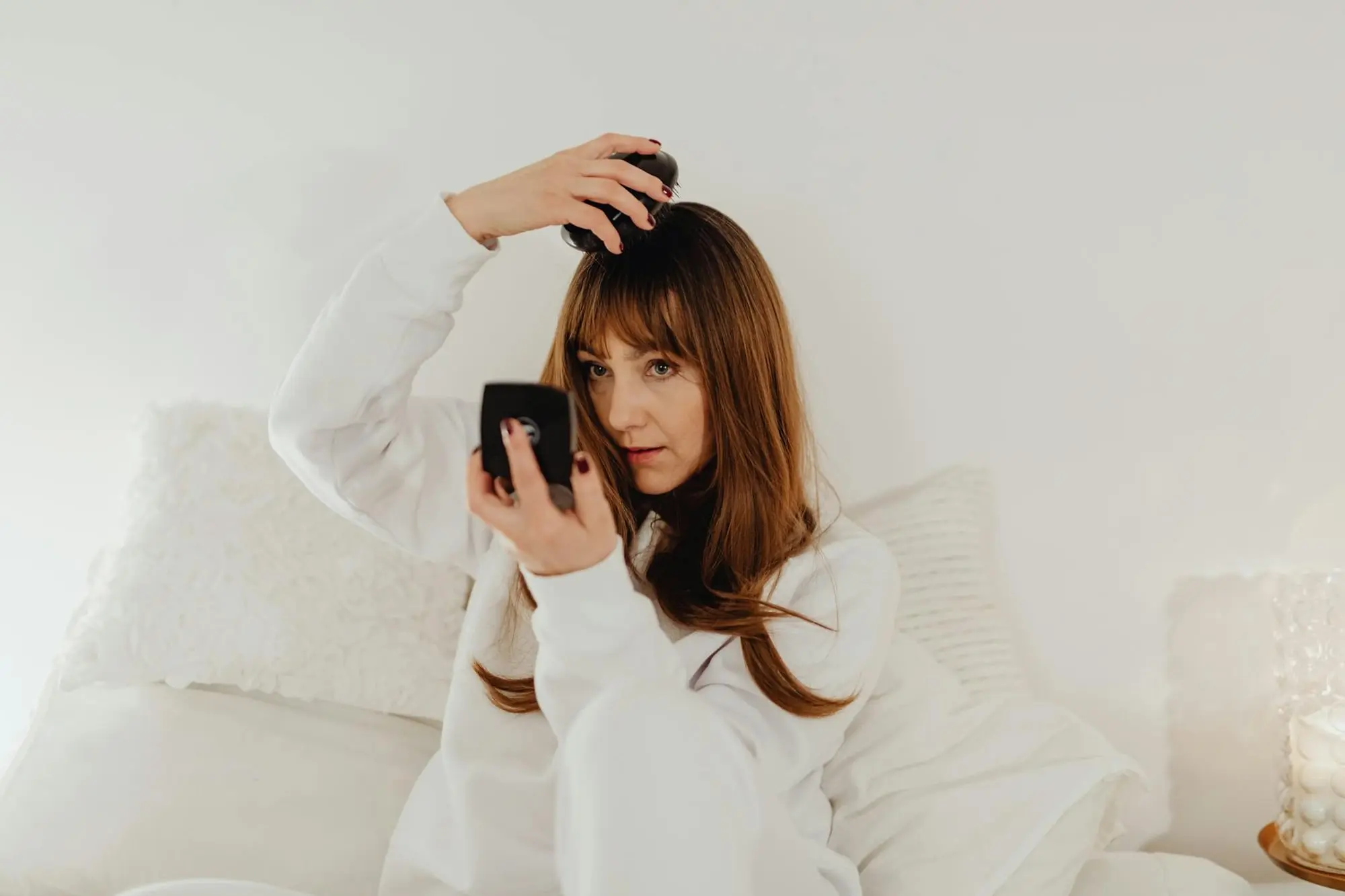
Jennifer Aniston sits cross-legged on her bedroom floor each morning, running a boar bristle brush through her famous locks with the same methodical precision she brings to her yoga practice. The routine takes exactly five minutes – 100 strokes from root to tip – and it’s a ritual she’s maintained religiously for over two decades. “People think it’s old-fashioned, but my grandmother taught me this, and look at her hair in old photos,” Aniston shared in a recent interview with Allure magazine.
What seemed like Hollywood vanity or nostalgic tradition turns out to have serious scientific backing. Recent research from the International Journal of Cosmetic Science confirms what Aniston and countless grandmothers have long suspected: regular brushing doesn’t just detangle hair – it actually improves its structural health at the cellular level.
The revelation comes at a time when many people have abandoned traditional brushing in favor of finger-combing and minimal manipulation, following advice from curl specialists and natural hair advocates. While those approaches work beautifully for certain hair types, the pendulum may have swung too far away from this time-tested practice.
The Science Behind Better Brushing
According to research published in 2023, brushing creates measurable improvements in hair’s mechanical properties. The study analyzed hair samples from 200 participants over six months, comparing those who brushed regularly with those who didn’t.
The results were striking. Regular brushers showed 31% less breakage and significantly improved shine measurements. More importantly, microscopic analysis revealed that brushing helps distribute natural sebum oils from the scalp down the hair shaft, creating a protective coating that prevents environmental damage.
Dr. Francesca Fusco, a dermatologist who treats celebrities like Scarlett Johansson, explains the mechanism simply: “When you brush properly, you’re essentially conditioning your hair with its own natural oils. It’s like giving yourself a mini treatment every day.”
The key word here is “properly.” The research distinguished between beneficial brushing techniques and damaging ones. Wet brushing, aggressive strokes, and using the wrong tools actually increased breakage by up to 40%.
Celebrity Hair Secrets: Who’s Been Brushing All Along
Gwyneth Paltrow revealed on her Goop podcast that she uses a Mason Pearson brush – the same brand favored by Kate Middleton – for exactly 50 strokes each night. “It’s meditative,” Paltrow explained. “But I also notice my hair looks shinier the next day.”
Celebrity hairstylist Jen Atkin, who works with Kim Kardashian and Chrissy Teigen, has quietly been advocating for proper brushing techniques with her clients for years. According to Vogue, Atkin’s approach involves:
- Starting with detangled, dry hair
- Using natural bristle brushes for fine to medium hair
- Choosing wide-tooth combs followed by boar bristle brushes for thick hair
- Brushing in sections rather than trying to tackle all hair at once
- Working from mid-length to ends, then roots to ends
- Limiting sessions to once daily, preferably at night

The technique matters enormously. Atkin emphasizes that brushing should never hurt or create static. “If you’re hearing snapping sounds or seeing hair in the brush beyond a few strands, you’re doing it wrong,” she told Harper’s Bazaar.
The Right Tools Make All the Difference
Not all brushes are created equal, and the wrong choice can negate any benefits while causing significant damage. Research shows that brush selection should match hair texture, density, and individual scalp sensitivity.
Natural bristle brushes work best for fine to medium hair because they’re gentler and better at distributing oils. The bristles have microscopic scales that grab and move sebum without scratching the hair cuticle.
Mixed bristle brushes combine natural boar bristles with nylon pins, making them ideal for thicker hair that needs more detangling power. The nylon provides structure while the natural bristles add conditioning benefits.
Paddle brushes with ball-tipped pins work well for daily detangling but shouldn’t be the only tool in your routine. They’re excellent for working through tangles before using a finishing brush.
Celebrity trainer and wellness expert Tracy Anderson, who works with Madonna and other A-listers, points out that hair health connects directly to overall wellness. “When clients start taking better care of their hair, they usually start taking better care of everything else too,” Anderson shared with Shape magazine.
Timing and Technique: When Brushing Works Best
The timing of brushing sessions significantly impacts results. According to the International Association of Trichologists, evening brushing provides maximum benefits because it prepares hair for the overnight repair cycle.
During sleep, cellular regeneration peaks, and having properly distributed oils helps this natural process. Morning brushing, while beneficial for styling, doesn’t provide the same conditioning advantages.

The technique itself requires patience and mindfulness – qualities that celebrities like Jennifer Aniston credit with improving not just their hair, but their overall well-being. The repetitive motion has meditative qualities similar to those found in practices like knitting or tai chi.
Professional hairstylist Sally Hershberger, who has worked with Meg Ryan and Hillary Clinton, recommends treating brushing sessions as self-care rituals rather than rushed grooming tasks. “Five minutes of mindful brushing beats thirty minutes of elaborate treatments,” Hershberger told Women’s Health.
Common Mistakes That Sabotage Results
Even with good intentions, many people inadvertently damage their hair while trying to improve it. The most common mistakes include brushing wet hair, using synthetic brushes exclusively, and applying too much pressure.
Wet hair is significantly more fragile than dry hair – up to 30% weaker according to cosmetic chemistry research. Celebrity colorist Rita Hazan, who works with Beyoncé and Jennifer Lopez, never allows wet brushing in her salon. “It’s the fastest way to create breakage and frizz,” Hazan explained to Allure.
| Brushing Factor | Beneficial Approach | Damaging Approach |
|---|---|---|
| Hair Condition | Completely dry or slightly damp | Soaking wet or freshly washed |
| Pressure Applied | Light, gentle strokes | Aggressive, forceful brushing |
| Frequency | Once daily, preferably evening | Multiple times throughout the day |
| Brush Type | Natural bristles or quality mixed bristles | Cheap synthetic brushes with sharp edges |
The transformation doesn’t happen overnight, but results typically become visible within 2-3 weeks of consistent practice. Hair appears shinier, feels smoother, and breaks less during styling – benefits that compound over time.
For people who’ve avoided brushing due to curl preservation concerns, the solution isn’t complete avoidance but rather adapted techniques. Curly-haired celebrities like Tracee Ellis Ross use wide-tooth combs followed by minimal brushing with natural bristles, focusing mainly on the scalp area.
The emotional impact of healthier hair extends far beyond appearance. When Jennifer Aniston talks about her morning brushing ritual, she describes it as a form of self-respect – a daily commitment to caring for herself that sets a positive tone for everything that follows.
In a world of complicated beauty routines and expensive treatments, the simple act of brushing represents something beautifully uncomplicated: taking time to nurture what you already have. Sometimes the most profound changes come from the smallest, most consistent acts of care.
—
How long does it take to see results from regular brushing?
Most people notice increased shine and smoother texture within 2-3 weeks of daily brushing. Reduced breakage and improved hair strength typically become apparent after 6-8 weeks of consistent practice.
Can brushing damage curly or textured hair?
When done properly with the right tools, brushing benefits all hair types. Curly hair requires gentler techniques, natural bristle brushes, and focusing primarily on the scalp area rather than the entire length.
What’s the difference between cheap and expensive brushes?
Quality brushes use natural materials, have smoothly finished bristles, and are designed to distribute oils effectively without causing static or breakage. Cheap brushes often have rough edges that damage the hair cuticle.
Should I brush my hair if I use a lot of styling products?
Yes, but timing matters. Brush before applying products or after they’re completely dry. Brushing through wet styling products can cause uneven distribution and increased breakage.
You might also like