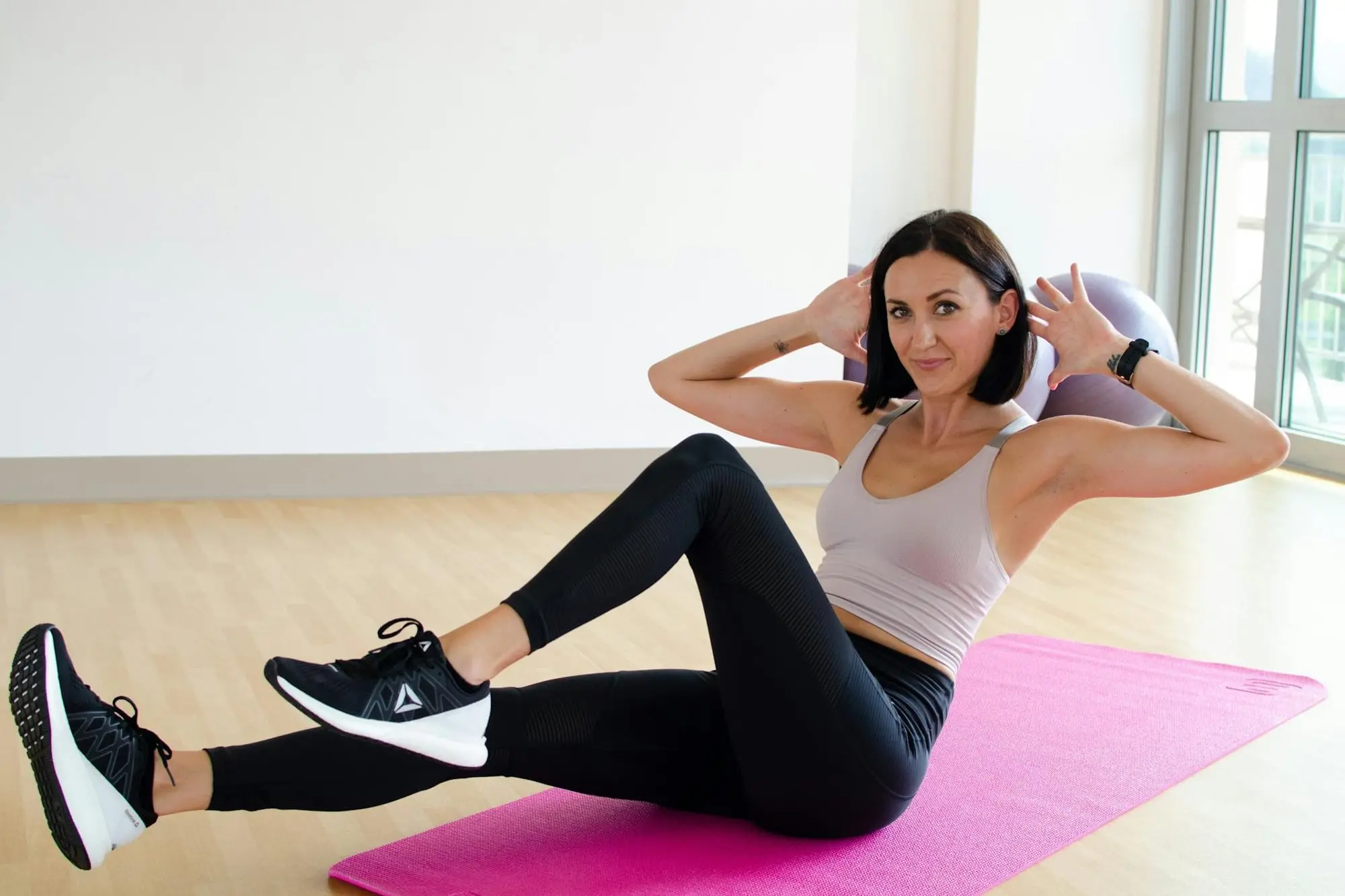
Picture this: It’s 5 AM at a private gym in West Hollywood, and Jennifer Aniston is lying on a yoga mat, her body forming a perfect crescent shape as she holds what appears to be an impossibly challenging position. Her legs are extended straight out, hovering just inches off the ground, while her shoulders remain lifted in a delicate balance that would make most people shake within seconds.
This isn’t just another celebrity workout photo op – Aniston has been incorporating the hollow hold into her fitness routine for over a decade, crediting this single exercise as one of the secrets behind her enviably strong core. According to her longtime trainer Leyon Azubuike, who has worked with the actress since 2019, the hollow hold has become a non-negotiable foundation of her workout sessions.
“Jennifer can hold a perfect hollow for over 60 seconds now,” Azubuike revealed in a recent interview with Women’s Health magazine. “When we started, she could barely manage 15 seconds, but she understood that mastering this one move would transform her entire core strength.”
What Makes the Hollow Hold So Effective
The hollow hold might look deceptively simple, but it’s actually one of the most comprehensive core exercises you can perform. Unlike traditional crunches that only target the superficial abdominal muscles, the hollow hold engages your entire core system – including the deep stabilizing muscles that protect your spine and improve posture.
Tracy Anderson, the celebrity trainer known for working with Gwyneth Paltrow and Madonna, considers the hollow hold a cornerstone movement. According to Shape magazine, Anderson incorporates hollow hold variations into nearly every core sequence she designs, explaining that it teaches the body to work as an integrated unit rather than isolated muscle groups.
Research from the American Council on Exercise shows that isometric holds like the hollow position activate up to 40% more muscle fibers than dynamic movements. This increased activation translates to faster strength gains and improved muscle endurance – exactly what you need for a truly functional core.
The beauty of the hollow hold lies in its progressive nature. Whether you’re a complete beginner or an advanced athlete, you can modify this exercise to match your current fitness level while continuously challenging yourself to improve.
How to Perfect Your Hollow Hold Form
Getting the hollow hold right requires attention to detail and patience with the learning process. Don Saladino, who has trained Ryan Reynolds and Blake Lively, emphasizes that proper form trumps duration every single time.
Start by lying on your back with your arms at your sides and knees bent. Press your lower back firmly into the floor – this is the foundation of the movement. From here, slowly extend your legs while simultaneously lifting your shoulders off the ground, creating a gentle “hollow” or banana shape with your body.
The key is maintaining that lower back connection to the floor throughout the entire hold. The moment your back arches up, you’ve lost the primary benefit of the exercise. Many people make the mistake of trying to hold the position too long before they’ve mastered the proper alignment.
Your arms can either remain at your sides, extend overhead for added difficulty, or stay bent with hands behind your head for support. The important thing is finding a variation that allows you to maintain perfect form while challenging your current strength level.

Common Mistakes That Sabotage Your Results
Even experienced fitness enthusiasts often struggle with hollow hold technique, making subtle errors that significantly reduce the exercise’s effectiveness. The most frequent mistake is allowing the lower back to lift off the ground, which shifts the work away from the deep core muscles and potentially strains the spine.
Another common error involves holding your breath during the exercise. Proper breathing is crucial for maintaining core stability and maximizing the hold duration. Focus on taking slow, controlled breaths while keeping your core engaged – it’s more challenging than it sounds, but essential for building real functional strength.
Many people also rush into advanced progressions before mastering the basics. Gunnar Peterson, who has trained Jennifer Lopez and Sofia Vergara, always starts his celebrity clients with bent-knee variations before progressing to straight legs. According to Peterson’s interview with People magazine, this methodical approach prevents injury while building a solid foundation.
Here are the most important form cues to remember:
- Keep your lower back pressed firmly against the floor
- Breathe steadily throughout the hold
- Start with bent knees before progressing to straight legs
- Focus on quality over duration
- Keep your chin slightly tucked, not craning your neck
- Engage your glutes to help stabilize your pelvis
- Stop immediately if you feel strain in your neck or lower back
Building Your Hollow Hold Progression Plan
The journey to mastering the hollow hold is deeply personal, and everyone progresses at their own pace. A 2024 study published in the Journal of Strength and Conditioning Research found that participants who followed a structured progression plan improved their hold times by an average of 300% over eight weeks.
Harley Pasternak, celebrity trainer to Ariana Grande and Lady Gaga, recommends starting with just 10-15 second holds and focusing entirely on perfect form. According to his methodology featured in Vogue, the goal isn’t to achieve the longest hold possible right away, but to build consistent strength through gradual progression.
Begin with the bent-knee variation, holding for 10-15 seconds with perfect form. Once you can comfortably maintain this position for 30 seconds without your lower back lifting, progress to the straight-leg version. From there, you can add arm variations, increase hold duration, or incorporate gentle rocking motions for added challenge.
The key is listening to your body and progressing only when you’ve truly mastered the previous level. Jennifer Aniston didn’t build her impressive hollow hold strength overnight – it took months of consistent practice and gradual progression under professional guidance.

Integrating Hollow Holds Into Your Workout Routine
The hollow hold works beautifully as both a standalone exercise and as part of a larger core routine. Many Pilates instructors, including those at popular studios like SoulCycle and Barry’s Bootcamp, use hollow holds as preparation for more complex movements.
You can incorporate hollow holds into your routine 3-4 times per week, either at the beginning of your workout as core activation or at the end as a finishing challenge. The exercise requires no equipment, making it perfect for home workouts, hotel rooms, or anywhere you have enough space to lie down.
Consider pairing hollow holds with complementary exercises like planks, bird dogs, or dead bugs for a comprehensive core workout. This combination approach, often used in CrossFit programming, ensures you’re developing strength in multiple planes of movement.
| Progression Level | Duration Goal | Form Focus | Next Step |
|---|---|---|---|
| Beginner | 10-15 seconds | Bent knees, back pressed down | Increase hold time |
| Intermediate | 30-45 seconds | Straight legs, steady breathing | Add arm variations |
| Advanced | 60+ seconds | Rock or pulse variations | Complex progressions |
The transformation that comes from mastering the hollow hold extends far beyond visible abs. Like Jennifer Aniston discovered through her consistent practice, this exercise builds the kind of deep, functional core strength that improves everything from posture to athletic performance. It’s not about achieving the perfect Instagram-worthy pose – it’s about developing a foundation of strength that supports you in every movement, every day.
The hollow hold teaches patience, consistency, and the profound satisfaction that comes from slowly but surely mastering something truly challenging. Every second you can add to your hold time represents real progress, real strength, and a deeper connection to your body’s incredible capabilities.
—
How long should I hold a hollow hold as a beginner?
Start with 10-15 second holds focusing on perfect form rather than duration. Once you can maintain proper alignment for 30 seconds, you’re ready to progress to more challenging variations.
Is it normal to shake during a hollow hold?
Yes, shaking is completely normal and indicates your muscles are working hard. As long as you maintain proper form with your lower back pressed to the floor, the shaking will decrease as you build strength.
Can hollow holds replace traditional crunches?
Hollow holds are actually more effective than traditional crunches because they engage the entire core system, including deep stabilizing muscles. They’re an excellent replacement that provides superior functional strength benefits.
How often should I practice hollow holds?
You can safely practice hollow holds 3-4 times per week, allowing at least one day of rest between sessions for muscle recovery. Consistency is more important than frequency for building strength.